
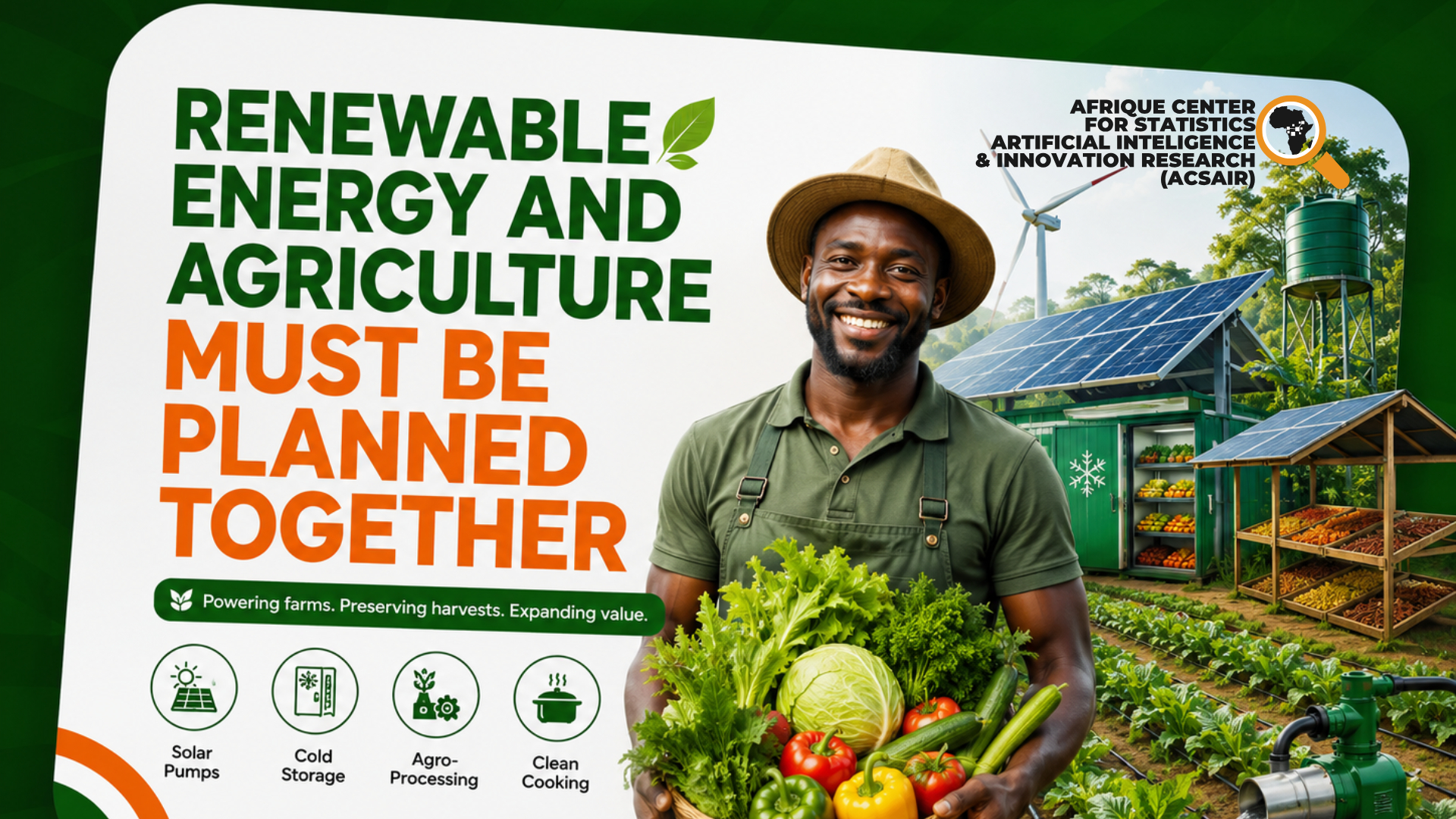
In many African economies, agriculture remains one of the largest livelihood systems yet energy planning and agricultural planning are often treated separately and this separation is costly. Solar pumps, dryers, cold storage, refrigeration, agro-processing equipment and clean cooking solutions can all improve productivity, reduce losses and expand farmer’s income opportunities when they are connected to farming and food systems.
Energy is not an abstract service and that is because it determines how much land can be irrigated, how long produce can be preserved, whether food can be processed locally, whether market timing can improve and whether manual labour can be reduced. Renewable energy therefore becomes a tool for moving farmers from raw production into value addition, where incomes and bargaining power can improve.
The strategic opportunity for African countries is to design renewable energy as part of rural economic transformation. A solar-powered farm, a drying enterprise, a cold storage hub or a clean energy processing unit can change local markets when supported by finance, skills and market access. Energy and agriculture should not meet accidentally but rather they should be planned as one development system.