
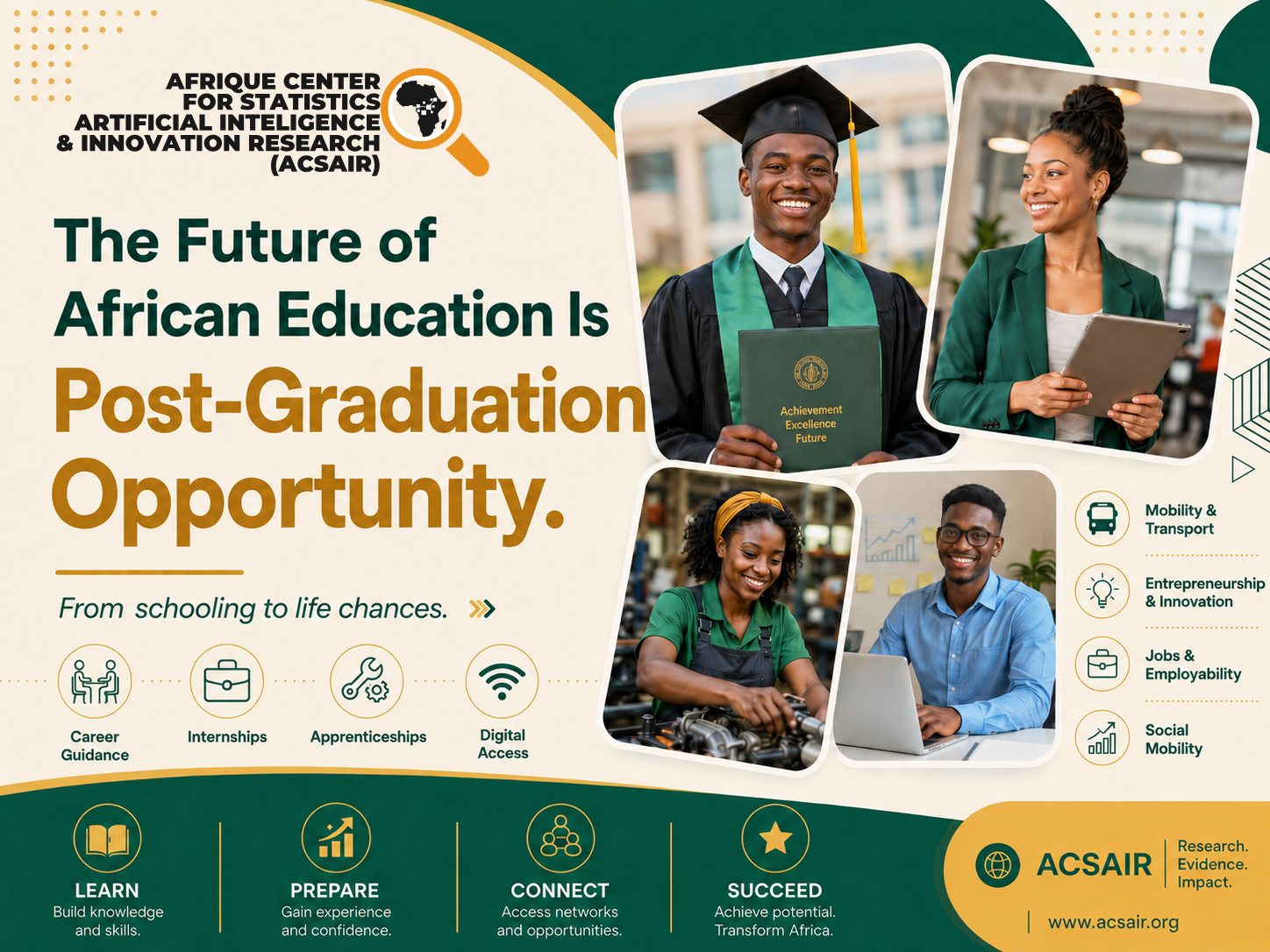
Education is often designed around access, enrollment, completion and infrastructure. These remain essential but post-graduation opportunity is equally important because unequal earning opportunities after education can weaken the role of schooling in reducing income and wealth inequality.
This insight should shape the next generation of African education policies. A young person’s journey should not end at graduation. The real test begins when education meets the labour market, when a certificate must become employment, enterprise, productivity, income and social mobility because if that transition is weak, families may begin to lose confidence in education as a pathway to progress.
Post-graduation opportunity depends on many systems working together like credible labour market data, career guidance, internships, apprenticeships, affordable internet, transport, entrepreneurship support, public-sector transparency, private-sector growth and regional integration. Education ministries cannot solve this alone. It requires coordination across labour, trade, industry, technology, finance and local government.
Africa’s education agenda must therefore move from schooling policy to capability policy. The continent needs education systems that do more than produce graduates but it needs systems that connect learning to life chances.