
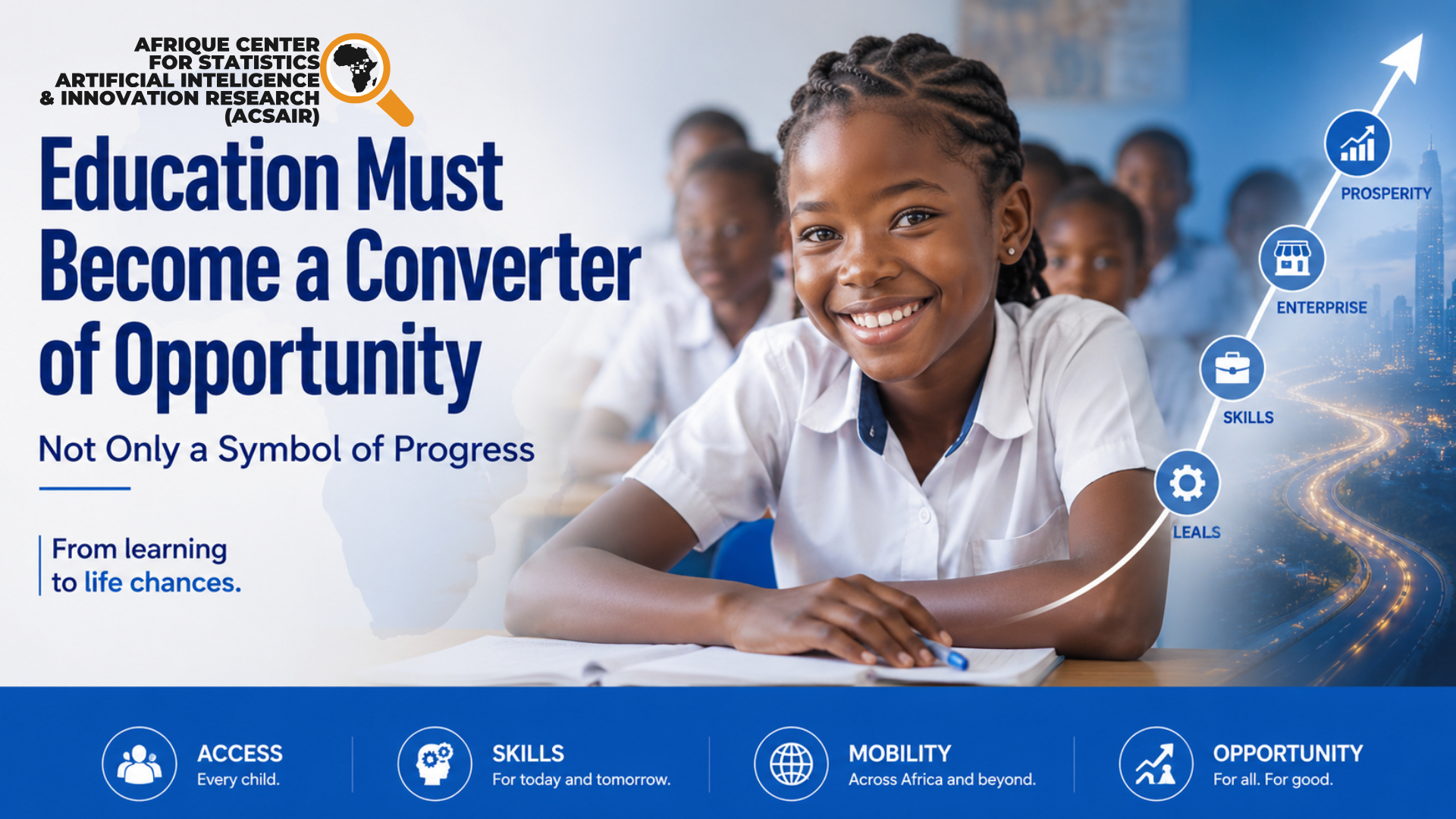
Across Africa, education is often discussed through the language of enrollment. When more children enter primary school, when secondary school numbers rise and when universities expand, societies rightly see progress but the deeper question is whether education is converting into equal economic opportunity for children from different social backgrounds.
This is where the conversation becomes more important because there is a significant gap in access to education and in the returns to education between the bottom 40 percent and the higher 40 percent of the population across Africa. In practical terms, two people may acquire the same level of education, but the one from a wealthier background may receive stronger economic returns from that education than the one from a poorer background.
For Africa’s development agenda, this is a central policy issue. Education cannot be treated only as a school completion matter but must also be treated as an opportunity conversion system. A certificate should increase a young person’s ability to find decent work, move across sectors, build wealth and participate confidently in the economy, regardless of the family into which they were born.
The future of inclusive growth will depend on whether African education systems can close this conversion gap because the true measure of educational progress is not only how many learners enter school but whether schooling gives every child a fairer chance to transform their life.