Friday, May 1

Afrique Center for Statistics, Artificial Intelligence & Innovation Research (ACSAIR)

The Afrique Center for Statistics, Artificial Intelligence & Innovation Research (ACSAIR) is a Pan-African development agency established to contribute to inclusive and sustainable transformation across Africa. ACSAIR works with communities, local leaders, grassroots organizations, civil society actors, public institutions, development partners, universities, experts and mission-aligned private actors to design, implement and scale practical programs that improve people’s lives.

ACSAIR’s identity is rooted in development delivery. The organization is concerned with what changes in the lives of people, especially those who are often left behind by conventional development systems. Its work is therefore centered on communities, livelihoods, resilience, skills, social services, inclusion, local institutions and measurable outcomes. Research, statistics, data and artificial intelligence are important, but they are used as enabling capabilities. They help ACSAIR ask better questions, design better interventions, monitor results, learn from implementation and communicate impact responsibly.

ACSAIR is being built for the African development context. The organization recognizes that many communities face overlapping challenges rather than isolated problems. A household may experience climate stress, low income, weak access to services, limited education opportunities, digital exclusion and gender barriers at the same time. ACSAIR’s approach therefore links practical implementation with local knowledge, community participation, evidence-informed design and partnership-based delivery

Our Vision & Mission

ACSAIR envisions an Africa where communities thrive, vulnerable people are protected, young people and women have dignified opportunities and development decisions are guided by evidence, local realities and inclusive action. This vision reflects both ambition and responsibility. It recognizes that Africa’s future will not be built only through policies and reports, but through practical systems that reach communities, strengthen local capacity and create opportunities for people to live with dignity.

ACSAIR’s mission is to work with communities, local leaders, civil society, public institutions and development partners to design, implement and scale practical development programs that improve lives across Africa, using statistics, data, research and responsible artificial intelligence as tools for better planning, delivery and accountability. This mission captures the balance ACSAIR seeks to maintain a deeply practical in the field, credible in evidence, ethical in innovation and accountable to the people and partners it serves.

Our Development Purpose

ACSAIR exists because too many development interventions are designed without adequate understanding of local realities and too many communities remain excluded from programs that are supposed to serve them. At the same time, some institutions produce useful research that does not move into action. ACSAIR’s purpose is to help close both gaps. It aims to support projects that are grounded in evidence but implemented in practical ways that communities can see, experience and sustain.

This purpose requires humility and discipline. ACSAIR does not assume that external actors already know the best solutions for every community. Instead, the organization begins with listening, participatory needs assessment, local dialogue, baseline information and existing community knowledge. It then works with partners to design interventions that fit the context, mobilize resources, deliver activities, monitor progress and learn from the results. In this way, evidence becomes a servant of development action rather than a substitute for action.

ACSAIR’s Core Values

Community first. ACSAIR begins with the lived realities, voices and priorities of the people it serves. The organization believes communities should not only be beneficiaries of development programs but also participants in defining problems, shaping solutions, giving feedback and sustaining progress.

Locally led development. ACSAIR respects local leadership, community knowledge and African ownership. The organization works to strengthen local actors rather than weaken them and it seeks partnership models that leave behind stronger local systems after projects end.

Evidence-informed action. ACSAIR uses data, research, statistics, monitoring and learning to improve practical development delivery. Evidence helps the organization avoid guesswork, target support more responsibly, measure results and improve programs over time.

Inclusion and dignity. ACSAIR prioritizes women, young people, children, persons with disabilities, vulnerable households and underserved communities. Inclusion is not treated as a decorative concept but as a practical design principle that should influence who is reached, who participates, who benefits and who is heard.

Integrity and accountability. ACSAIR protects trust through transparent practice, safeguarding, ethical resource use, responsible data management and honest reporting. The organization recognizes that partner and stakeholder confidence and community trust are built through consistency, not words alone.

Partnership and learning. ACSAIR works with others, learns from implementation and scales what works. The organization values collaboration because sustainable development requires governments, civil society, communities, experts, funders and private actors to contribute from their strengths.

Our Partners

Our Development Model

ACSAIR767 (1)

ACSAIR’s development model follows a clear cycle. It starts by listening and understanding community realities through participatory engagement, local partner dialogue, diagnostics and baseline assessment. It then designs practical solutions that respond to real needs and can be delivered with available resources and local ownership. ACSAIR implements projects through its teams, local partners, community structures and consortium arrangements. It monitors progress using indicators, feedback and responsible data systems. It evaluates results to understand what changed and what needs improvement. Finally, it adapts or scales successful models across communities, countries and regions.

This model helps ACSAIR remain practical while also remaining accountable. The organization does not treat implementation and evaluation as separate worlds. Monitoring, evaluation, accountability and learning are built into the program cycle from the beginning. This allows ACSAIR to generate the kinds of evidence that partners and stakeholders need, while also producing the kinds of learning that communities and implementers need to improve results

Our Pan-African Ambition

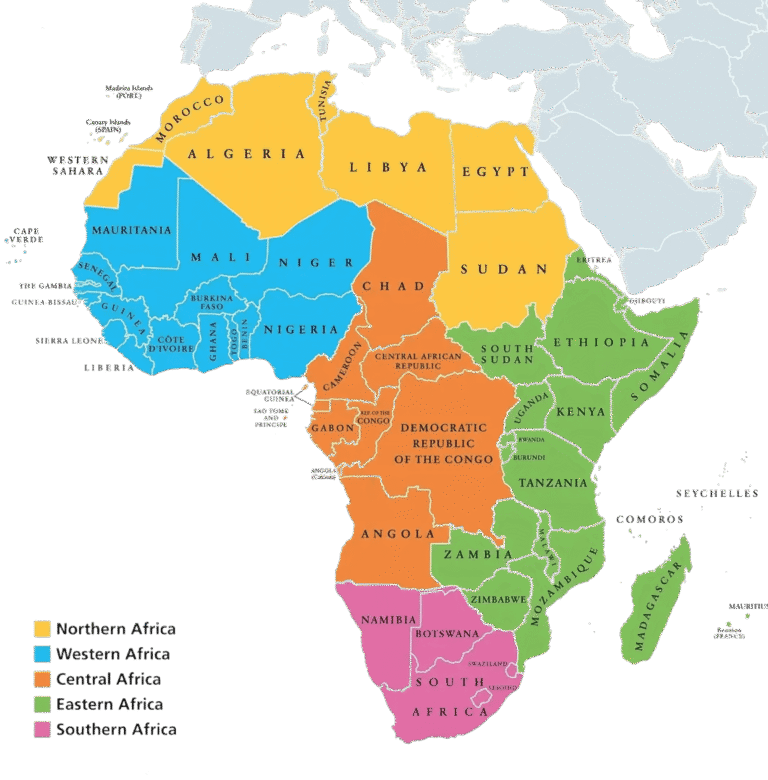
ACSAIR’s long-term ambition is continental. The organization seeks to work across East, West, Southern, North and Central Africa through a phased hub-and-network model. This means ACSAIR works with a lean continental secretariat, regional hubs or hosted desks, country-level partnerships and local implementation teams. This allows ACSAIR to combine Pan-African vision with local relevance.

The hub-and-network model is designed to protect quality, manage cost and strengthen local ownership. The continental secretariat provides institutional leadership, finance, compliance, partnerships, communications and knowledge coordination. Regional hubs or hosted desks support relationship-building and contextual adaptation. Country implementation partners and project teams lead local delivery, beneficiary engagement and community accountability. This structure allows ACSAIR to grow carefully while remaining close to the people and places it seeks to serve.

Why ACSAIR Matters Now

Africa’s development priorities require organizations that can do more than describe problems. Communities need partners who can understand local realities, mobilize resources, deliver programs, strengthen local capacity and show results. Donors need partners who can combine field presence with credible monitoring, learning and accountability. Public institutions need development actors that can support practical delivery while respecting local systems. Civil society organizations need partners that strengthen rather than replace grassroots work.

ACSAIR is built to respond to that need. It is a development agency with evidence-informed methods, a grassroots orientation, a Pan-African ambition and a commitment to responsible innovation. Its value lies not only in what it knows, but in what it helps communities change

Our Accountability Promise

ACSAIR is committed to responsible growth. As an emerging institution, it recognizes that credibility must be earned through strong governance, transparent systems, safeguarding, financial discipline, ethical partnerships, quality delivery and honest reporting. The organization prioritizes policies and practices that protect children, vulnerable adults, community participants, personal data, partner trust and donor resources.

ACSAIR also recognizes the risks connected with technology and data. Artificial intelligence and digital systems are used only where they improve development work ethically and safely. They are not used to replace community voice, informed consent, safeguarding, human judgment or accountability. Responsible innovation means that tools must serve people, not the other way around

We Are ISO Compliant

Afrique Center for Statistics, Artificial Intelligence & Innovation Research (ACSAIR) Limited is a Uganda registered non-profit company limited by Guarantee (Company Number: 80034198006505), incorporated under the Companies Act 2012. As a Pan-African research, innovation, development and implementation-support institution, ACSAIR maintains robust internal systems to ensure service quality, environmental responsibility and information security.

Although Afrique Center for Statistics, Artificial Intelligence & Innovation Research (ACSAIR) Limited has not pursued third-party ISO certification, our internal governance, quality assurance and operational systems are deliberately aligned with the core requirements of internationally recognised ISO frameworks. These internal policies are codified, periodically reviewed and consistently applied across the organisation, our projects and programs, partnerships and activities ensuring both compliance and continuous improvement.

  • We align with the principles and requirements of the following standards:
    ISO 9001:2015 – Quality Management Systems: Guiding our quality planning, implementation, monitoring, and continuous improvement across all projects.
    ISO 14001:2015 – Environmental Management Systems: Informing our responsible use of resources, environmental considerations, field logistics, and travel planning.
    ISO/IEC 27001:2022 – Information Security Management Systems: Underpinning our data governance, confidentiality, risk control, and information protection procedures.
    ISO 30415:2021 – Human Resource Management: Diversity and Inclusion: Informing our inclusive HR practices, equitable engagement approaches, and field team mobilisation.
    ISO 26000:2010 – Guidance on Social Responsibility: Supporting our ethical commitments, stakeholder engagement strategies, and community accountability frameworks.
    ISO 20700:2017 – Guidelines for Management Consultancy Services: Reinforcing transparent, client-centred, ethical, and accountable consultancy delivery.
    ISO 20252:2019 – Market, Opinion and Social Research: Strengthening the integrity, reliability, and consistency of our survey, research, and data collection methodologies.
    ISO 37002:2021 – Whistleblowing Management Systems: Informing our approach to safe reporting channels, responsible case handling, and protection of reporting persons.
    ISO 37301:2021 – Compliance Management Systems: Guiding the structure of our compliance processes, internal controls, and organisational accountability mechanisms.
    ISO 37000:2021 – Governance of Organizations: Supporting sound governance practices, decision-making structures, ethical leadership, and institutional oversight.
    ISO/IEC 27002:2022 – Information Security Controls: Informing the selection and application of practical security controls to safeguard information assets.
    ISO/IEC 27701 – Privacy Information Management: Strengthening our privacy governance practices and supporting the responsible handling of personal information.
    ISO/IEC 27035-1:2023 – Information Security Incident Management: Guiding our preparedness, response, and recovery procedures for information security incidents.
    ISO 37001:2025 – Anti-Bribery Management Systems: Reinforcing our commitment to integrity, anti-corruption measures, and the prevention of bribery in all operations and engagements.
    ISO 44001:2017 – Collaborative Business Relationship Management Systems: Supporting effective partnership structures, trust-based collaboration, and clear relationship management processes.
    ISO 31000:2018 – Risk Management: Informing our identification, assessment, treatment, and monitoring of risks across programmes, operations, and partnerships.
    ISO 22301:2019 – Business Continuity Management Systems: Strengthening our ability to prepare for disruptions, maintain critical functions, and ensure operational resilience.
    ISO 45001:2018 – Occupational Health and Safety Management Systems: Guiding our approach to workplace health, safety planning, risk prevention, and staff wellbeing.
    ISO 20400:2017 – Sustainable Procurement: Informing our procurement practices to ensure ethical sourcing, environmental responsibility, and long-term value creation.

These standards are applied proportionally and pragmatically across our operations, particularly in fragile settings. They are reinforced by our Articles and documented internal protocols, which promote centralised accountability, streamlined decision-making and a values-based, results-driven organisational culture.

© 2026 Afrique Center for Statistics, Artificial Intelligence & Innovation Research (ACSAIR). Powered by Orphic Enterprises.