
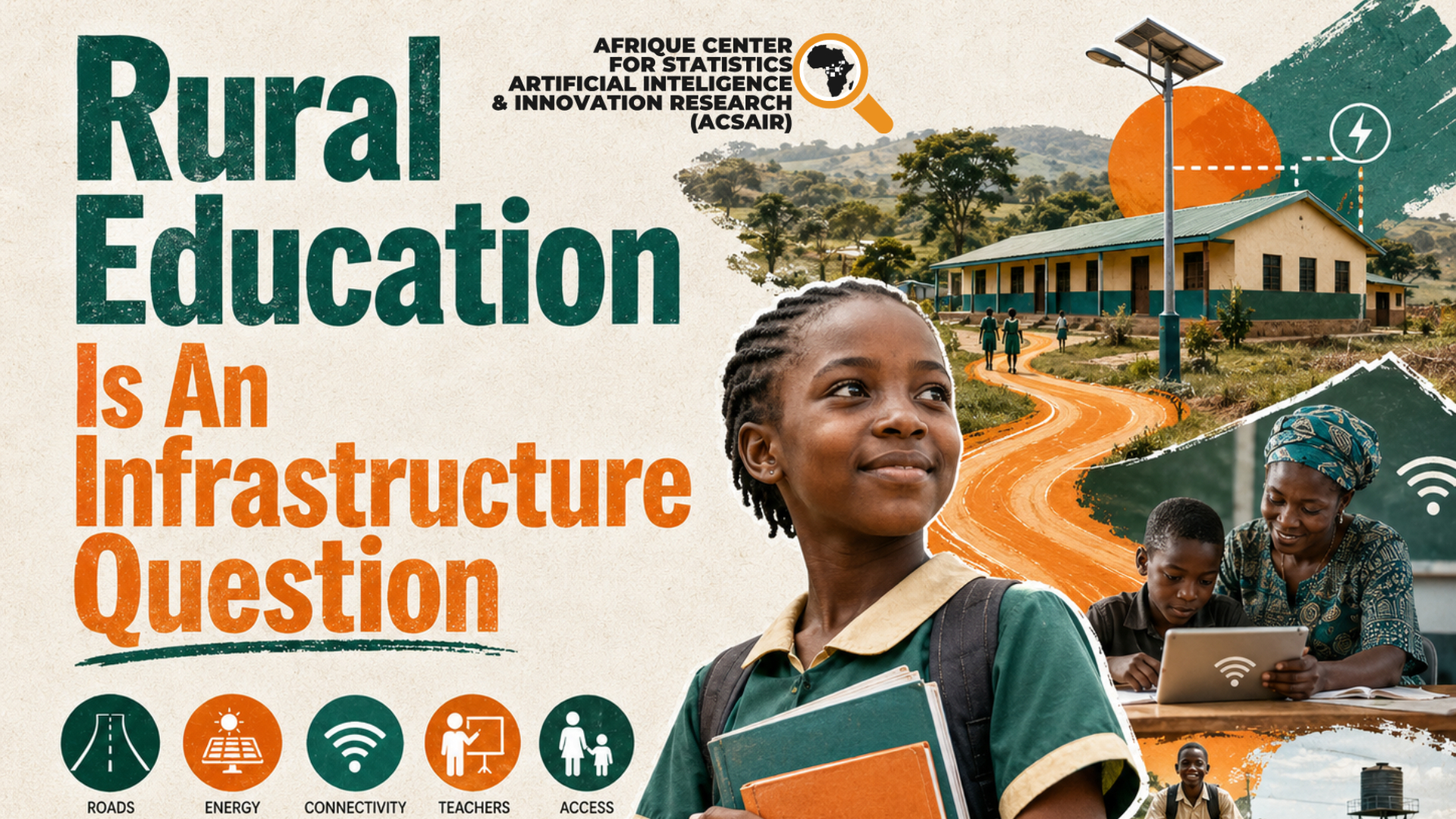
Residents in rural areas of Africa with the same level of household-head education as urban residents still record lower enrollment rates. This is a powerful reminder that educational inequality is not only about household aspiration or parental awareness but is also about geography, infrastructure and the uneven distribution of public services.
For many rural learners, the cost of education is not limited to school fees. It includes distance, transport, electricity, internet access, teacher availability, school quality, safety, household labour demands and the opportunity cost of remaining in school and these conditions shape whether education feels reachable, useful and sustainable.
Africa’s rural education challenge must therefore be understood as a systems challenge. Building classrooms matters, but so does connecting schools to roads, energy, digital learning, skilled teachers, local livelihoods and credible employment pathways. A rural child should not need to migrate before education becomes valuable.
Rural transformation will depend on whether education systems are designed around the realities of rural life. When rural education is strong, equips young people to improve agriculture, build local enterprises, use data, adopt technology and participate in wider markets and in that sense, rural education is economic infrastructure.