
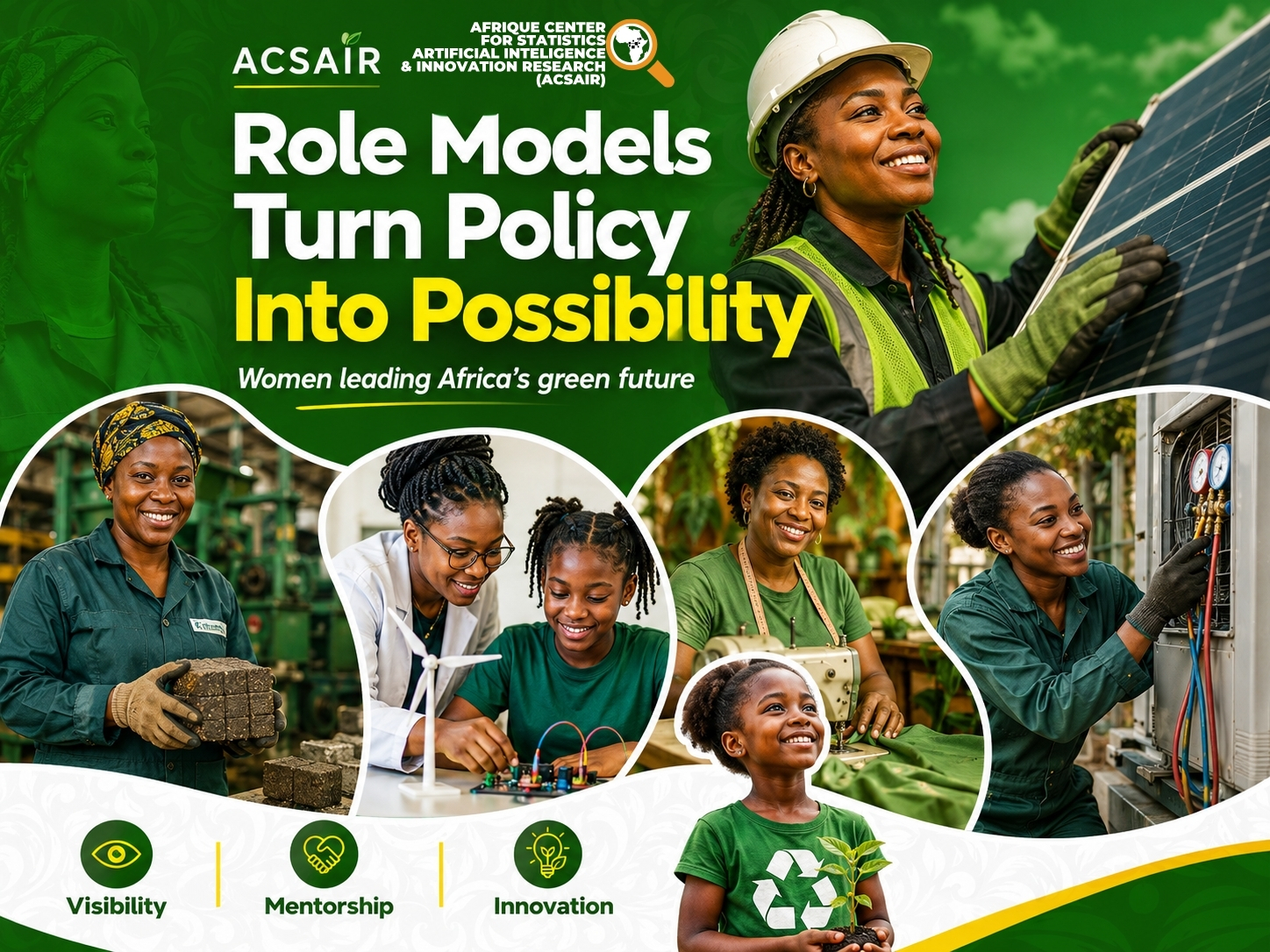
Countries in West Africa have women already working in renewable energy, recycling, briquette production, solar installation, sustainable construction, STEM advocacy, biogas, cooling repair and climate education. These women are not symbolic additions to the energy conversation. They are evidence that capability already exists, even where systems have not fully recognised or financed it.
Role models matter because they shift what young girls, families, schools and communities imagine as possible. A girl who sees a woman installing solar systems, repairing cooling equipment, producing briquettes, running a green enterprise or leading a STEM network receives a different message about her own future. Mentorship, visibility and storytelling therefore become part of the skills pipeline, because they challenge the social assumptions that keep women away from technical sectors.
For ACSAIR, this is an important communication lesson because data shows the scale of the gap, but stories reveal the human capacity already moving through that gap. Africa’s renewable energy transition must document and amplify its women innovators, because visibility is one of the early forms of institutional confidence.