
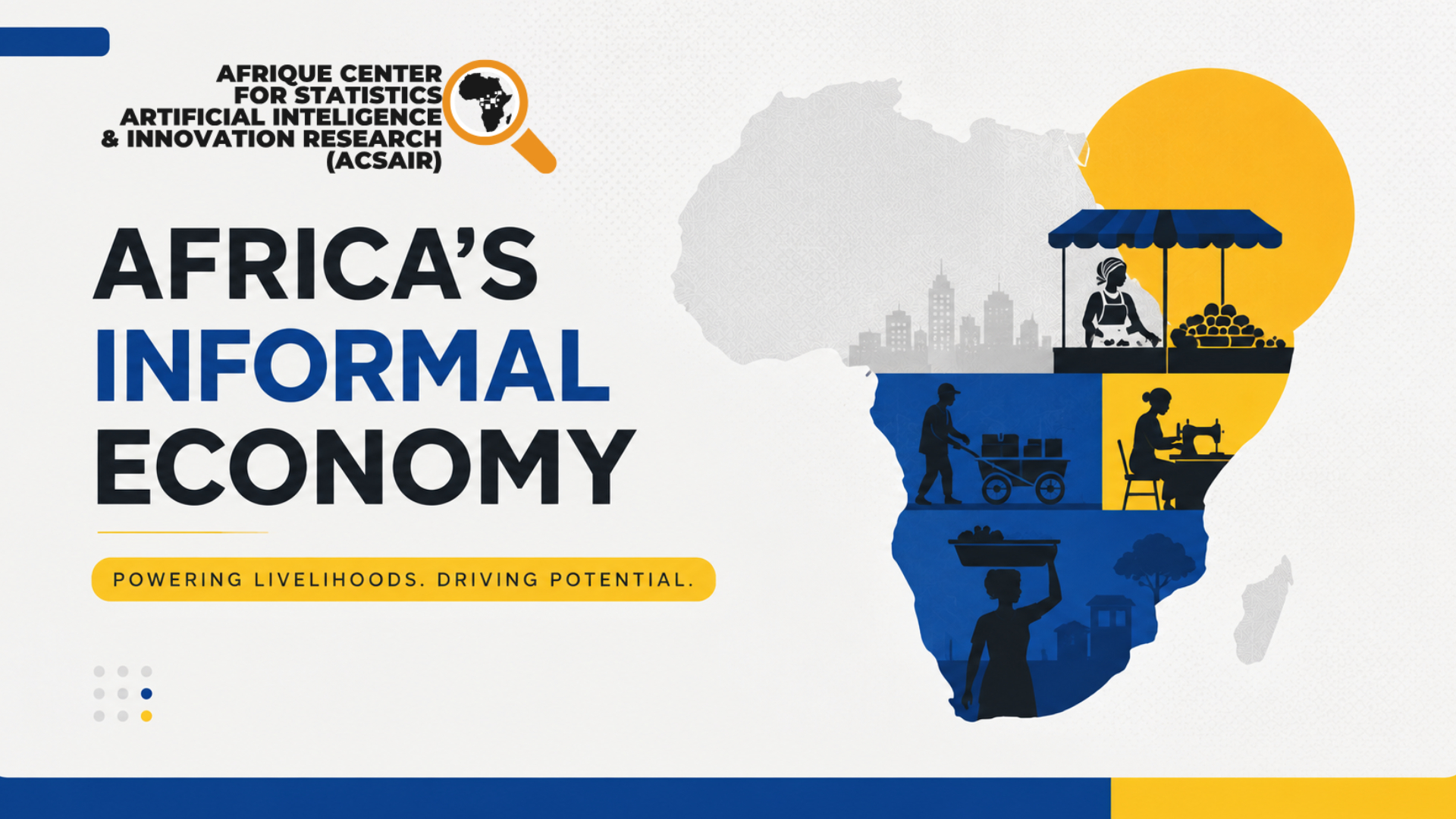
Across Africa, the informal economy is looked at as a tax problem, but it is also a livelihoods system, an employment system, a survival system and a financing challenge. Millions of people operate outside formal structures because formalization is costly, complicated, risky or disconnected from immediate economic benefit. Treating informality only as noncompliance misses the deeper institutional reality.
Informality occupies a major part of Africa’s output and employment and this means that a large share of the continent’s economic life produces value without leaving strong records, credit histories, social protection links or reliable tax pathways. The result is a narrow revenue base, weaker financial inclusion, limited business scaling and reduced capacity for states to plan with accurate data.
Formalization must therefore be designed as a pathway into opportunity and not as a punishment. Digital payments, simplified registration, low-cost transaction fees and compliance, mobile-based bookkeeping, business identification systems and access to credit can help informal firms see the value of entering the formal economy. When formalization gives entrepreneurs visibility, protection, finance and market access, it becomes a development tool.