
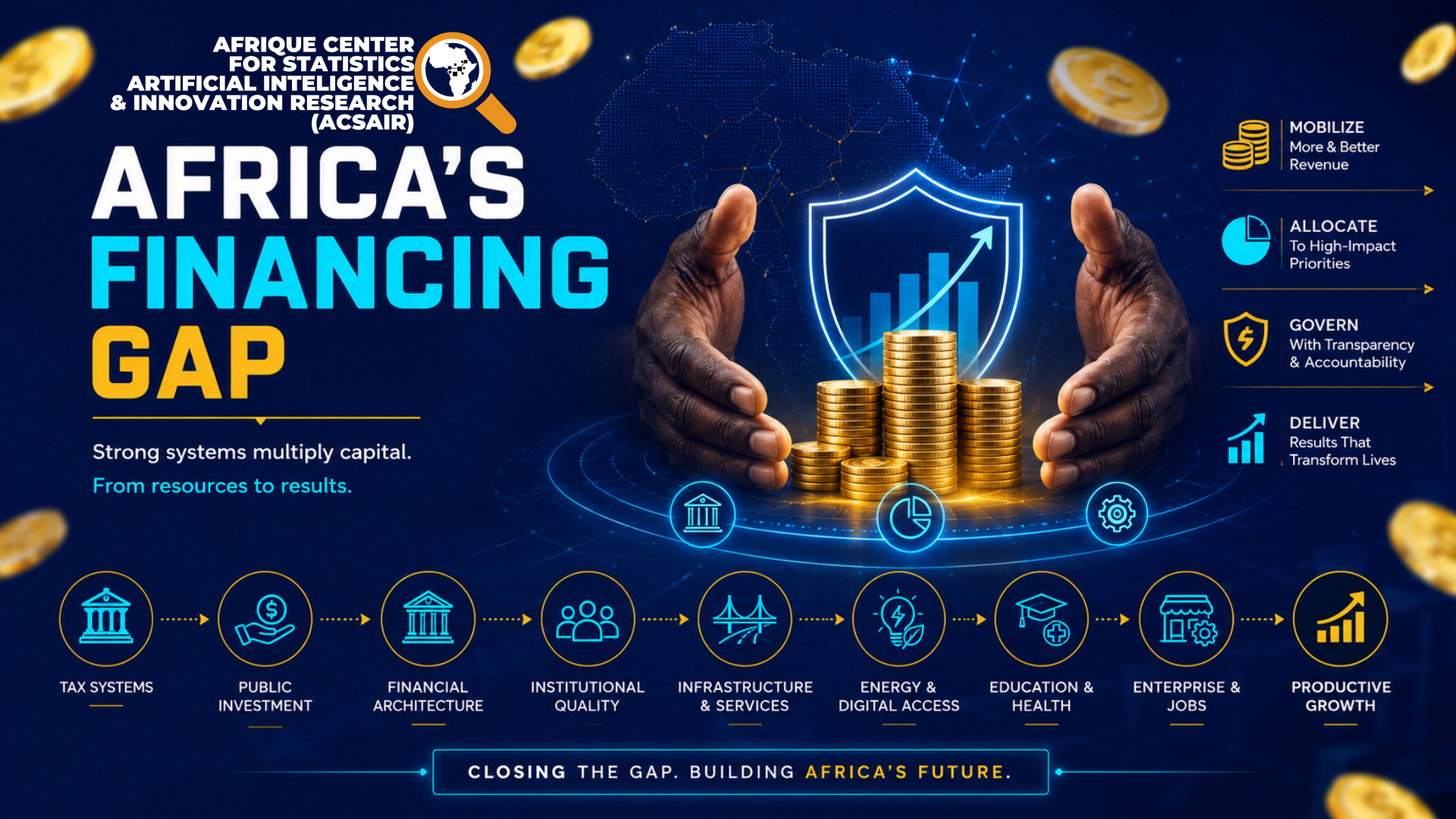
The financing gap is often presented as a shortage of money, as though Africa’s main problem is simply that too little capital is available. Africa’s development challenge is also a systems challenge, because large amounts of value are lost through weak tax administration, inefficient public investment, illicit flows, fragmented financial markets and limited institutional capacity to deploy capital productively.
This changes the way development financing should be discussed. Africa certainly needs more capital, but it also needs stronger systems for collecting, protecting, allocating and multiplying that capital. A dollar raised through taxation, borrowing, remittances, pension funds, climate finance or private investment has different development value depending on the credibility of the institution that manages it and the productivity of the project into which it is placed.
Seen from that angle, closing the financing gap is a governance, data, planning and financial architecture agenda. The continent’s opportunity lies in building institutions that can convert available resources into roads, energy systems, digital infrastructure, schools, health systems, industrial parks, research capacity and productive enterprises. Africa’s financing future will depend as much on institutional quality as on the volume of money mobilized.