
Global energy and fertilizer shocks often enter African economies through prices, but their impact goes far beyond inflation figures. They affect transport costs, food production, household budgets, exchange rates, public finances and business confidence. A disruption in a distant shipping route can quickly become a higher food price in an African market, a higher fuel bill for a small business or a weaker currency for a government managing external payments.
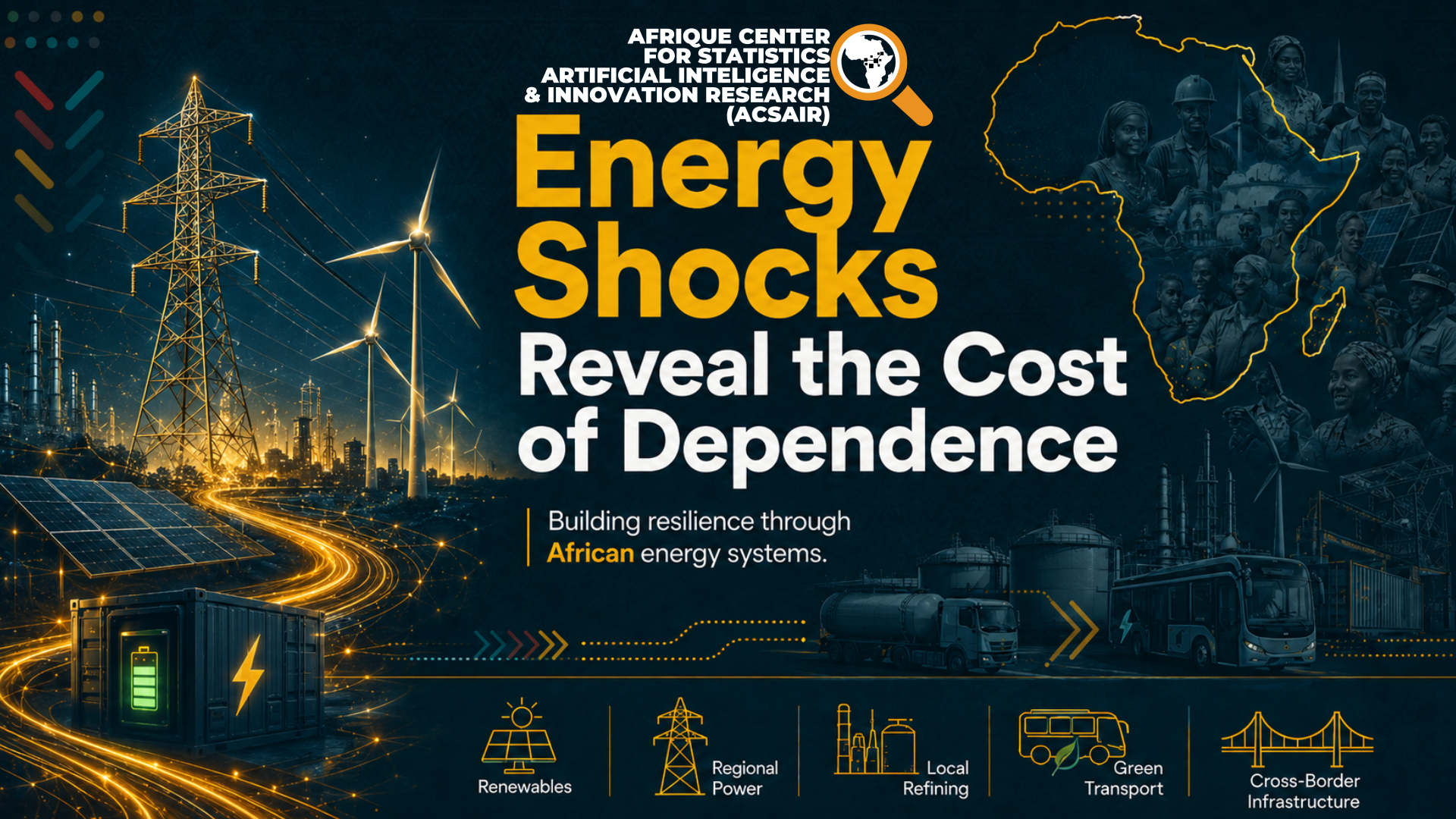
Africa cannot build resilient economies while remaining highly exposed to imported fuel, volatile fertilizer markets and external logistics disruptions. The continent needs a more deliberate energy mix that includes renewables, gas as a transition fuel where appropriate, regional power pools, local refining capacity, green public transport and stronger cross-border energy infrastructure. The more Africa can produce, transmit, store and trade energy within the continent, the more it can reduce the external shocks that repeatedly weaken growth and household welfare.