
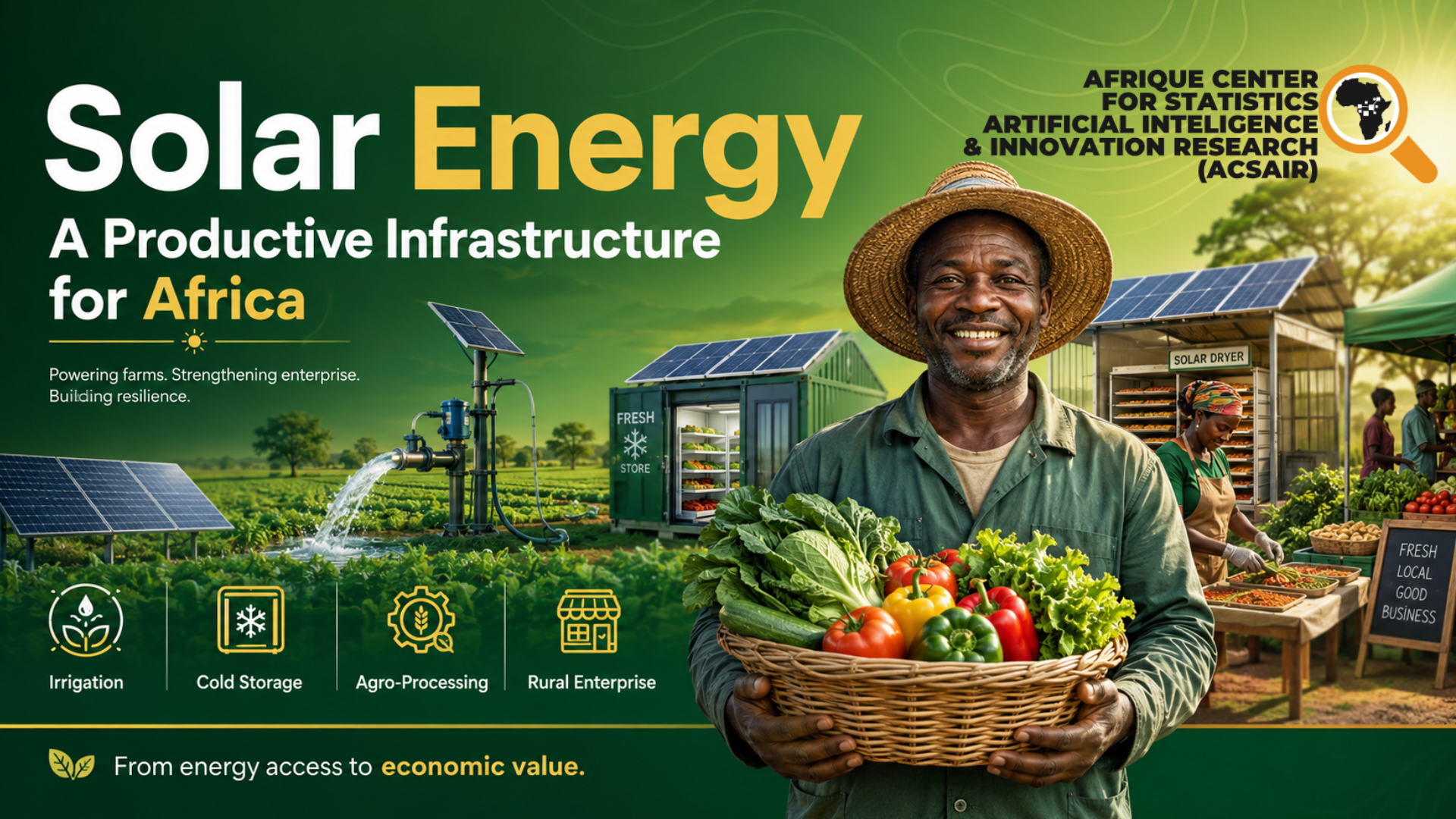
In Africa, solar energy is often introduced through the language of access such as lighting homes, charging phones and connecting off-grid communities. These are important first steps, but the deeper opportunity for Africa lies in productive use. When solar energy powers irrigation, refrigeration, agro-processing, drying, cooling, market stalls or small workshops, it becomes economic infrastructure and enables the move from survival activity to value creation.
The potential of solar home systems, mini-grids, water pumps, solar dryers and productive-use equipment in agriculture and small enterprise is on the rise and this matters because many African’s livelihoods are located in sectors where energy can directly increase productivity. A solar pump can reduce labour and improve yields, a dryer can reduce post-harvest losses, a refrigeration can extend market life and lighting can lengthen safe working hours and improve learning conditions.
The development question is therefore how to connect renewable energy to income and not only consumption. Africa’s energy transition will be stronger when solar systems are designed around the economic lives of communities, especially producers and traders. In that sense, solar power becomes a platform for rural enterprise, food security and local resilience.