
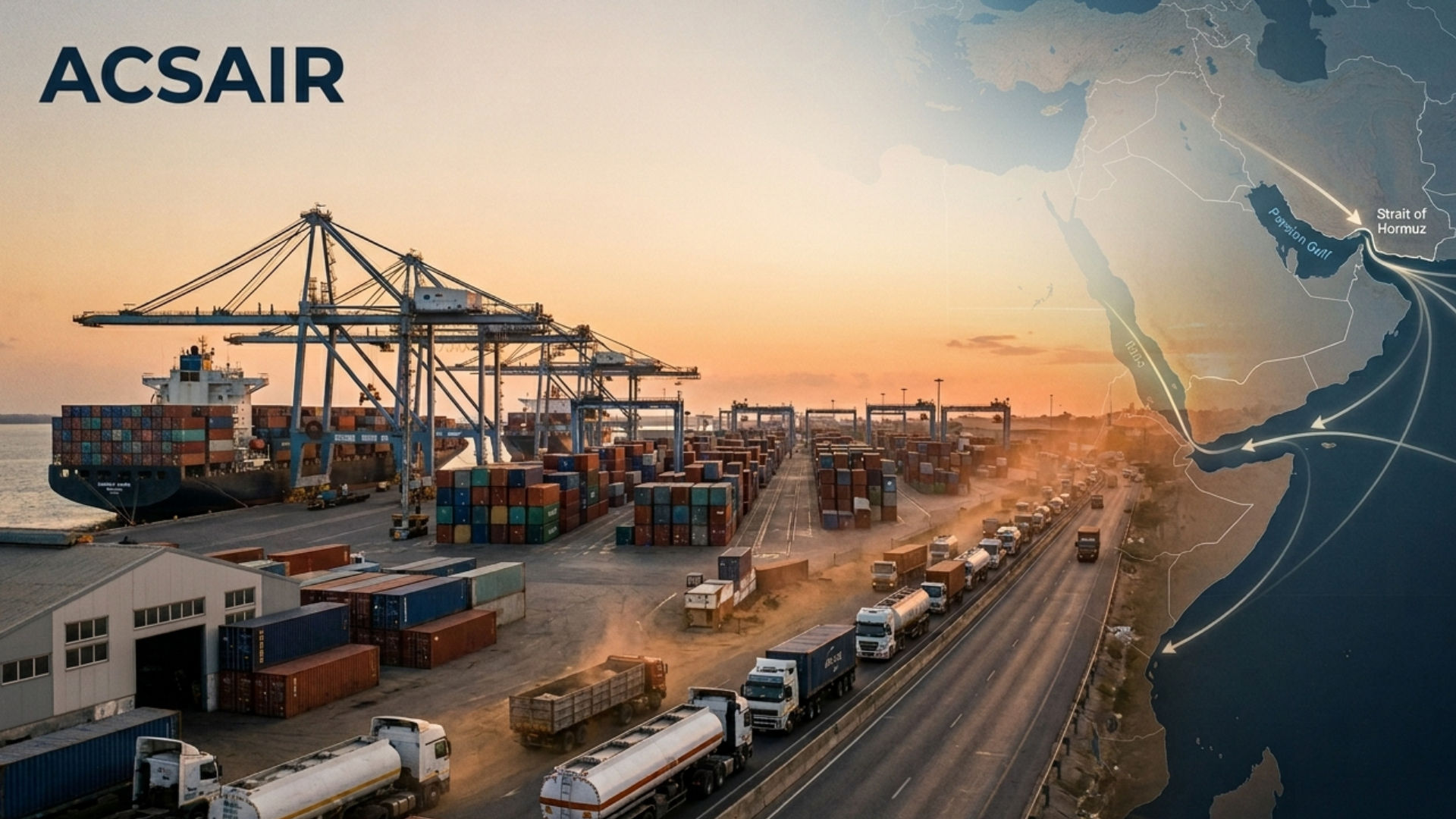
The Strait of Hormuz may appear geographically distant from Africa, but it functions as one of the world’s critical economic arteries. When movement through such a corridor is disrupted, the consequences do not remain confined to the Middle East. They travel through oil prices, fertilizer supplies, shipping insurance, freight costs and import delays.
For African economies, this reveals a deeper vulnerability. A large share of the continent’s exposure to the crisis comes through commodities that are foundational to everyday life: fuel, food and agricultural inputs. When these become more expensive or harder to access, the effect spreads into transportation costs, food prices, production costs and household welfare. A disruption at sea can therefore become a price increase in a rural market or a fiscal problem for a government already managing debt pressure.
This is why trade corridors must be treated as part of Africa’s economic security architecture. Ports, shipping routes, regional logistics hubs and maritime security are not technical side issues. They are part of the infrastructure that determines whether African economies can absorb shocks or whether external instability repeatedly becomes domestic hardship.