
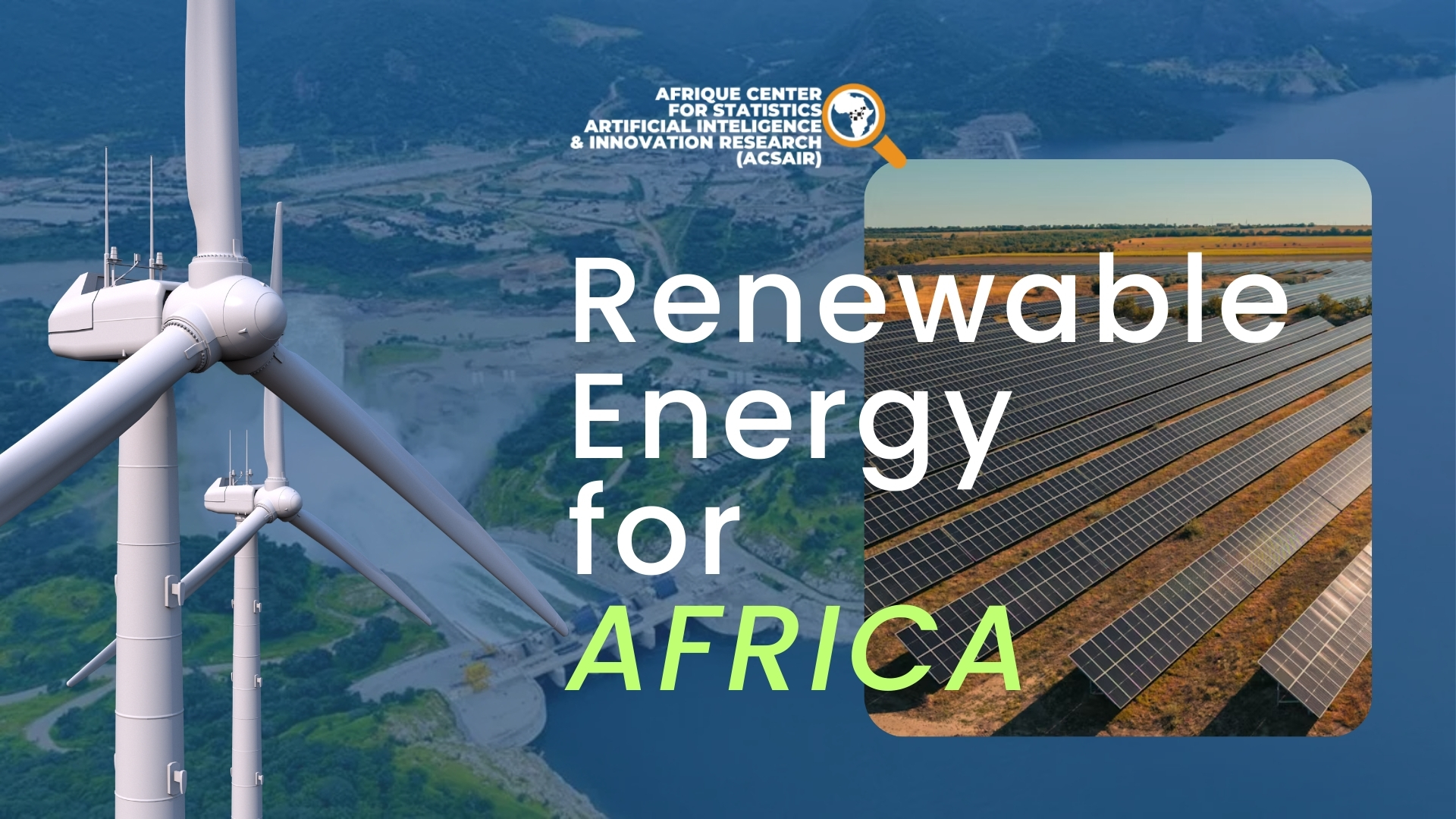
Most conversations about Africa’s energy transition still start with one question: How many megawatts are being added?
That metric still matters. But it is no longer the most important one.
The more useful question now is: How quickly can Africa make clean energy bankable at scale? That is where the real transition is happening.
In 2024, Africa added about 4.2 GW of renewable capacity, bringing total installed renewable capacity to roughly 67 GW. Even with that progress, the continent still accounts for only about 1.5% of global renewable capacity.
At the same time, the access gap remains enormous. The IEA notes that around 600 million people in Africa still lack electricity and more than 1 billion still lack access to clean cooking.
The Financing Signal Has Changed
What makes this moment different is not only technology, but finance.
According to the IEA, private investment in clean energy in Africa has nearly tripled since 2019, reaching almost USD 40 billion in 2024. The same analysis also notes that solar PV is now the least-cost source of power in many African countries.
But the bottleneck is also becoming clearer. The IEA highlights that average deal sizes in the off-grid solar sector remain relatively small and investors have increasingly shifted attention toward areas like commercial and industrial solar and EV-related opportunities, where revenue risk is often easier to underwrite than in residential energy access.
The Next Phase Is Not Grid vs. Off-Grid
Africa’s next energy phase is not a simple debate between grid and off-grid systems.
It is about household access plus productive demand.
The real breakthrough will come when energy access is designed around livelihoods: irrigation, cold storage, agro-processing, small manufacturing, clinics, schools and local businesses. That is how electricity connections become income and income becomes the cash flow that makes utilities, mini-grids and private capital sustainable.
Recent SDG 7 tracking also reinforces that progress depends on a mix of solutions, including grid extension and decentralized options such as mini-grids and stand-alone systems, especially in areas where traditional grid expansion is too costly or too slow.
Why Mission 300 Matters Beyond the Headline
This is also why initiatives like Mission 300 matter far beyond headline targets.
The deeper value is in the country-level compacts and reforms: utility strengthening, regional energy integration, private capital mobilization and policy commitments that make the sector more investable over time. World Bank reporting on Mission 300 explicitly frames these compacts around reforms, utility efficiency, regional integration and attracting private investment.
At the January 2025 Africa Energy Summit in Dar es Salaam, African leaders endorsed the Dar es Salaam Energy Declaration and Mission 300 partners pledged more than $50 billion to support expanded energy access across the continent.
ACSAIR Perspective
Africa’s energy transition will be won less by technology choice alone and more by institution design: how risk is structured, how tariffs and collections work, how reliability improves and how productive use is built into the system from the start.
If Africa gets that right, it will not just participate in the global energy transition. It will help define a new model for it that is distributed, demand-led and development-first.