
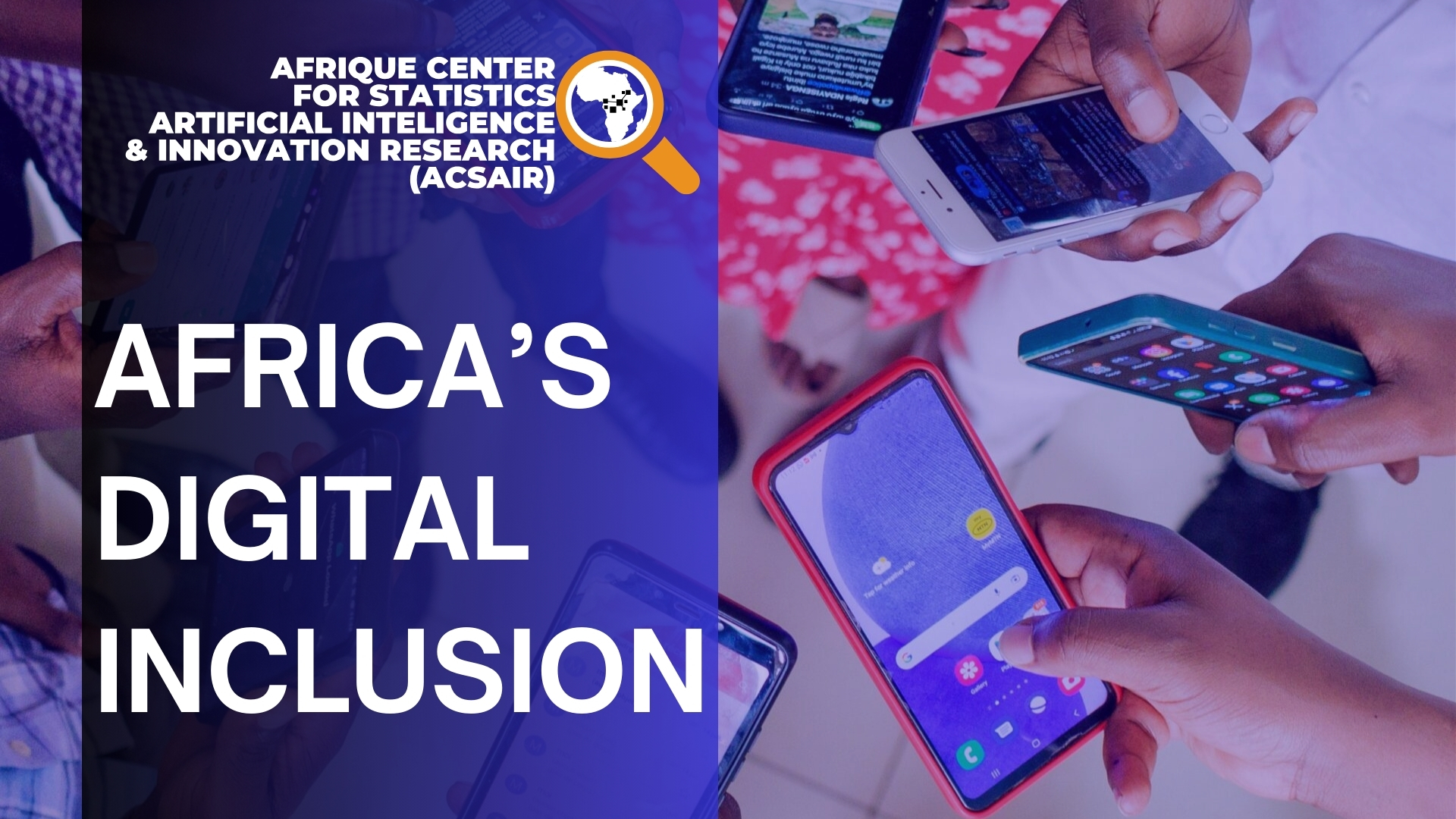
Much of the conversation about Africa’s digital future is still framed in yesterday’s language. We often hear statements about penetration rates, SIM cards, coverage maps and device counts.
Those metrics still matter. But ACSAIR believes they no longer tell the full story.
Across the continent, the smartphone is no longer just a communication device. It has become a compressed institution.
In one hand, it now often carries the work of a bank branch, a classroom, a market stall, a media studio, an office desk, a payment terminal, a transport desk and sometimes even the first point of contact with public services.
The Real Challenge Is Not Only Connectivity, It Is Agency
That is why Africa’s real digital challenge is not simply connecting people to the internet.
It is whether connectivity can be converted into agency.
A person may have signal and still remain excluded. A person may own a phone and still be digitally locked out. A person may be “online” and still be unable to fully learn, trade, build, save, verify or grow.
What Meaningful Digital Participation Actually Requires
Meaningful digital participation depends on more than network coverage.
It depends on:
- The cost of data
- The quality of the device
- Reliable electricity
- Digital skills
- Trust in platforms
- Local language relevance
- Whether the internet is built mainly for consumption or for production
These factors determine whether being online expands opportunity or simply expands access to content.
The Next Divide: Scrolling vs. Creating
This is where ACSAIR believes the conversation must deepen.
The next digital divide on the continent will not only be between the connected and the unconnected. It will be between:
- those who use the internet primarily to scroll, and
- those who use it to create economic power, knowledge, credibility and mobility
In that sense, Africa does not only face a connectivity gap. It faces a conversion gap.
Why the Conversion Gap Matters Even More in the AI Era
As the world moves deeper into artificial intelligence, this gap becomes even more important.
Those who cannot afford meaningful access to the digital layer may also be excluded from the intelligence layer now being built on top of it.
The Question That Matters Most Now
So perhaps the most important question is no longer:
“How many Africans are online?”
But rather:
“How much human capability, economic value and civic power does being online actually unlock?”
Because the true power of technology is not in having more devices. It is in enabling one device to expand human possibility.