
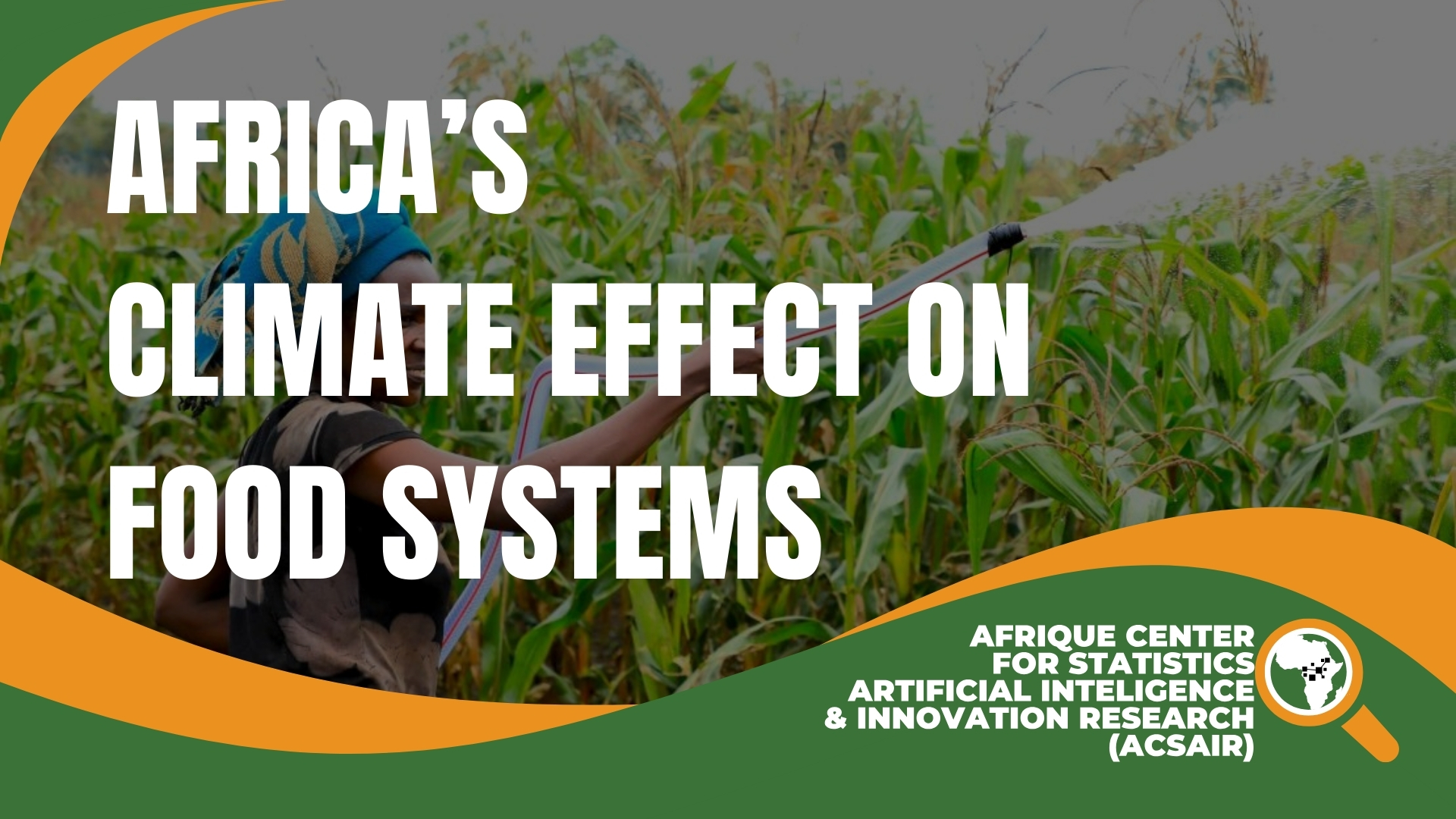
Africa’s climate challenge is often discussed as though it were only an agricultural issue.
At ACSAIR, that framing is now too narrow.
What is being disrupted across the continent is not only food production. It is predictability.
For decades, African food systems have depended on rhythms that people could read: when the rains would come, when land could be prepared, when harvests could dry safely, when roads would remain passable, when herds could move, when traders could price with confidence and when families could buy food without panic.
Climate change is steadily weakening that reliability.
When Climate Shocks Travel Beyond the Farm
A drought does not stop at the farm gate. It moves into wholesale markets, household budgets, school meal systems, national import bills and public stability.
A flood does not only destroy crops. It can cut off roads, damage storage facilities, interrupt informal trade and turn a production shock into a food access crisis.
A heatwave is not only about lower yields. It also affects labour productivity, livestock health, water demand, food safety and the shelf life of perishable foods.
These realities make one thing clear: climate disruption in Africa is not confined to farming alone. It affects the wider systems that keep food moving, accessible and affordable.
Why Climate Resilience Must Go Beyond the Farm
This is why Africa must stop treating climate resilience as a farm-only agenda.
Seeds matter. Irrigation matters. But so do:
- Rural roads
- Storage systems
- Cold chains
- Local processing
- Early warning systems
- Market information
- Insurance
- Regional trade corridors
Resilience must be built across the full food system, not just at the point of production.
The Most Valuable Asset in a Food System
The deeper issue is that the most valuable asset in any food system is not only output. It is reliability.
When climate change erodes reliability, it erodes confidence across the entire chain. Farmers invest less. Traders become more cautious. Lenders tighten. Prices grow more volatile. And consumers, especially poor households, pay the highest price.
The Real Climate Question Facing Africa
Africa does not only need to produce more food. It needs food systems that can keep functioning when the weather no longer behaves as it once did.
That, to ACSAIR, is the real climate question before the continent: not simply how to grow more, but how to build food systems that remain dependable under pressure.