
— OUR NETWORK
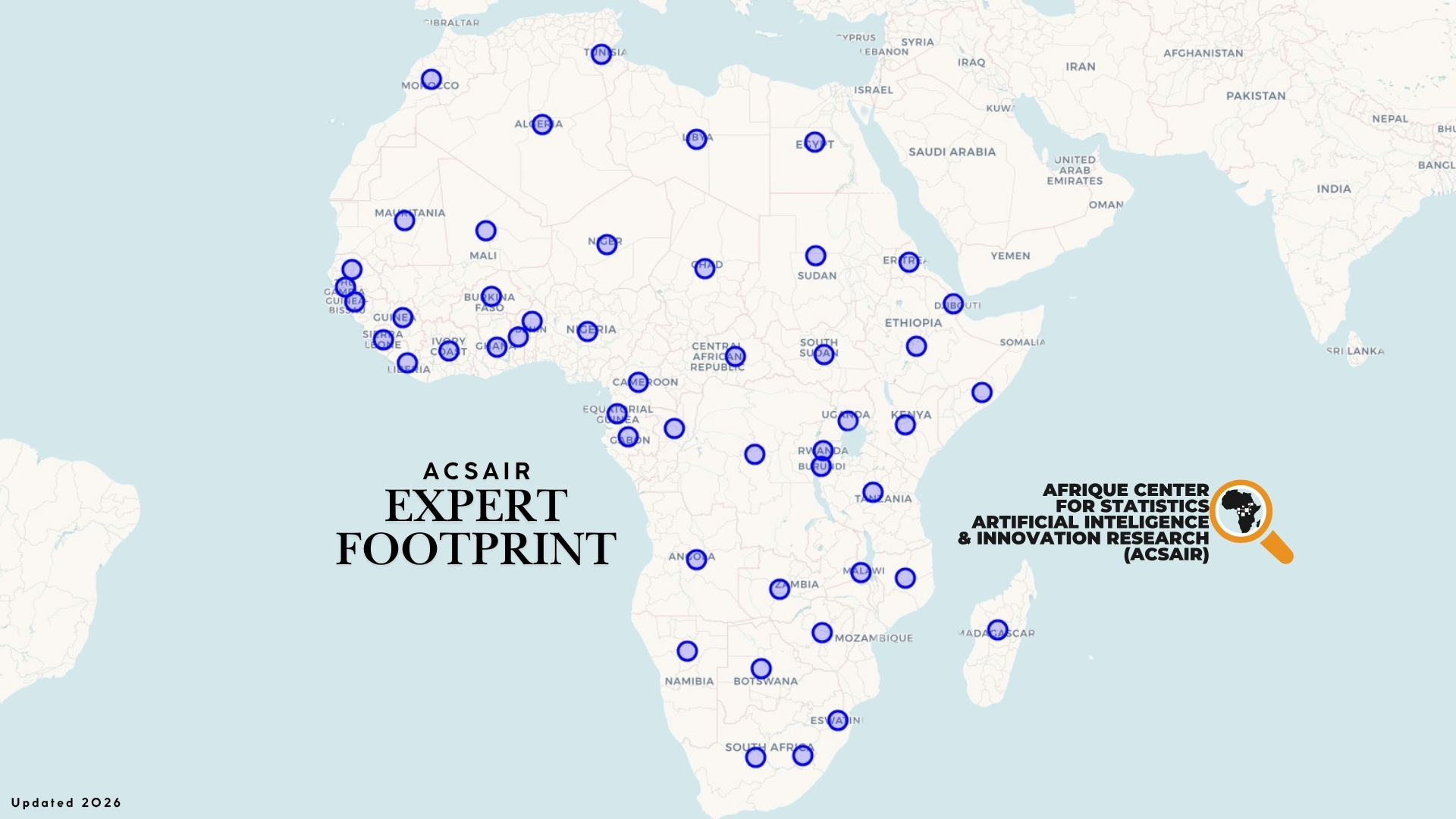
A Pan-African
network of experts & implementation support.
Africa’s development challenges are too large, diverse and locally specific for any single organization to address alone. Our ambition is continental and our method is partnership-based.
5
AFRICAN REGIONS
6
NETWORK LAYERS
12+
THEMATIC AREAS
4
WORKING LANGUAGES
— OUR PHILOSOPHY
Sustainable development requires many forms of knowledge.
Communities understand lived realities. Local organizations understand culture, trust and access. Field implementors understand practical delivery. Technical experts bring specialized knowledge. Universities contribute research and learning. Development agencies bring experience and resources.
ACSAIR’s role is to connect these strengths into accountable programs that improve lives and produce measurable results.
— THE ARCHITECTURE
Five layers, one accountable system.
Each layer plays a distinct role — together they combine continental coordination with regional understanding and community-level delivery.
01 | CONTINENTAL SECRETARIAT
The institutional core
Institutional leadership, governance, partnerships, resource mobilization, finance, compliance, communications, MEAL and knowledge management — the common standards that let ACSAIR grow without losing quality.
- Single institutional entry point
- Proposals, due diligence & reporting
- Tools, templates, training & guidance
02 | REGIONAL HUBS & HOSTED DESKS
Proximity across five regions
Presence across East, West, Southern, North and Central Africa through hubs, hosted desks and strong partner platforms — built for proximity, responsiveness and regional credibility, not bureaucracy.
- Context-adapted programming
- Hosted by ACSAIR or trusted partners
- Language, policy & donor fluency
03 | COUNTRY IMPLEMENTATION PARTNERS
Field delivery, close to communities
Grassroots organizations, national NGOs, farmer organizations, youth and women networks, schools and local agencies trusted by communities, committed to safeguarding and capable of transparent reporting.
- Beneficiary engagement & feedback
- Capacity strengthening & MEAL
- Pathway to community-level funding
04 | EXPERT NETWORK
The right knowledge at the right time
A flexible roster spanning community development, climate, agriculture, food systems, livelihoods, education, public health, safeguarding, data, responsible AI, communications and organizational development.
- Design, reviews, training, evaluations
- Mentoring & research translation
- Humility, inclusion, community-centered
05 | COMMUNITY ACTORS & LOCAL LEADERS
Without them, nothing endures
Community facilitators, youth and women leaders, farmer representatives, teachers, health volunteers, faith leaders and social workers who anchor programs in lived reality.
- Needs assessment & co-design
- Local accountability mechanisms
- Inclusion of women, youth, PWDs
— REGIONAL REACH
Proximity over bureaucracy.
Hubs and hosted desks adapt programs to context — building relationships, identifying opportunities and coordinating learning across countries.
01
East Africa
02
West Africa
03
Southern Africa
04
North Africa
05
Central Africa
LANGUAGES
Multilingual. Context-aware. Operationally fluent.
Technical work that is not only accurate, but relevant where it lands.
English
PRIMARY WORKING LANGUAGE
Français
REGIONAL ASSIGNMENTS
العربية
REGIONAL ASSIGNMENTS
Português
REGIONAL ASSIGNMENTS
Local Languages
COMMUNITY FIELDWORK
— FOR PARTNERS & STAKEHOLDERS
A practical platform for reaching communities — with quality and accountability.
Instead of disconnected consultants or isolated projects, our network connects expert input, local implementation, regional coordination, monitoring, learning and partnership management.
Stronger evidence
Programs designed with the right knowledge — supported by a flexible expert roster maintaining quality and ethical standards.
Contextual delivery
Implementation through actors who understand local language, culture, trust and access.
Reportable systems
Consistent MEAL, safeguarding and compliance support partner and donor confidence.
Responsible scale
Adapting models across borders by learning from what works — not copying without context.
Become part of a network that takes community-centered development
seriously.
We welcome implementation partners, regional hosts, technical experts and community leaders who share our commitment to accountability and inclusion.
- COMPLIANCE
ISO-aligned by design.
WE ARE ISO COMPLIANT
ACSAIR is a Uganda-registered non-profit company limited by Guarantee (Company No. 80034198006505), incorporated under the Companies Act 2012. We have not pursued third-party ISO certification however our internal governance, quality assurance and operational systems are deliberately aligned with the core requirements of internationally recognised ISO frameworks.
These internal policies are codified, periodically reviewed and consistently applied across the organisation, our projects, our partnerships and our activities, ensuring both compliance and continuous improvement.