
Agriculture remains central to Africa’s economies and livelihoods. According to African Union guidance on inclusive agricultural value chains, the sector accounts for about 16% of GDP and 50% of labor force employment across much of the continent.
The same guidance emphasizes the importance of building inclusive value chains especially for women, youth and other vulnerable groups and recommends a chain-wide, farm-to-fork approach that reduces transaction costs and ensures no one is left behind.
Inclusion Gaps Still Run Deep
Despite agriculture’s importance, major inequities persist across agrifood systems.
FAO highlights that women play critical roles in these systems, yet their contributions are often undervalued. It also stresses that gender equality is essential for building resilient and productive agrifood systems.
In Sub-Saharan Africa, women make up a large share of agrifood employment, but they continue to face significant barriers in access to assets, finance and economic opportunities.
The Economic Case for Gender Equality in Agrifood Systems
The case for inclusion is not only social, it is economic.
FAO reports that closing gender gaps in farm productivity and wages in agrifood systems could significantly increase economic output and improve food security outcomes.
It also points to measurable disparities, including:
- A 24% land productivity gap between female and male managed farms of the same size
- An 18.4% wage gap in agricultural wage employment
These gaps represent lost productivity, lost income and missed opportunities for broader economic growth.
Youth Inclusion Is Equally Urgent
Youth inclusion is another urgent priority.
The ILO reports that agriculture remains the primary source of employment for young workers in Sub-Saharan Africa, accounting for 60% of youth employment.
At the same time, AU-ILO strategy documents point to persistent challenges, including:
- Informality
- Precarious work
- Digital exclusion
These challenges are especially severe for young women and rural youth.
Policy Momentum Is Growing
There is already strong policy momentum for change.
The AfCFTA Protocol on Women and Youth in Trade provides a clear framework for inclusion and calls for action in several key areas:
- Participation in policy formulation
- Access to finance
- Productive and export capacity
- Access to trade information
- Digital trade inclusion
- Protection from harassment
- MSME integration and monitoring & evaluation
The protocol also explicitly calls for cooperation to strengthen women and youth inclusion in regional and continental value chains.
From Policy Commitments to Practical Action
The next challenge is implementation.
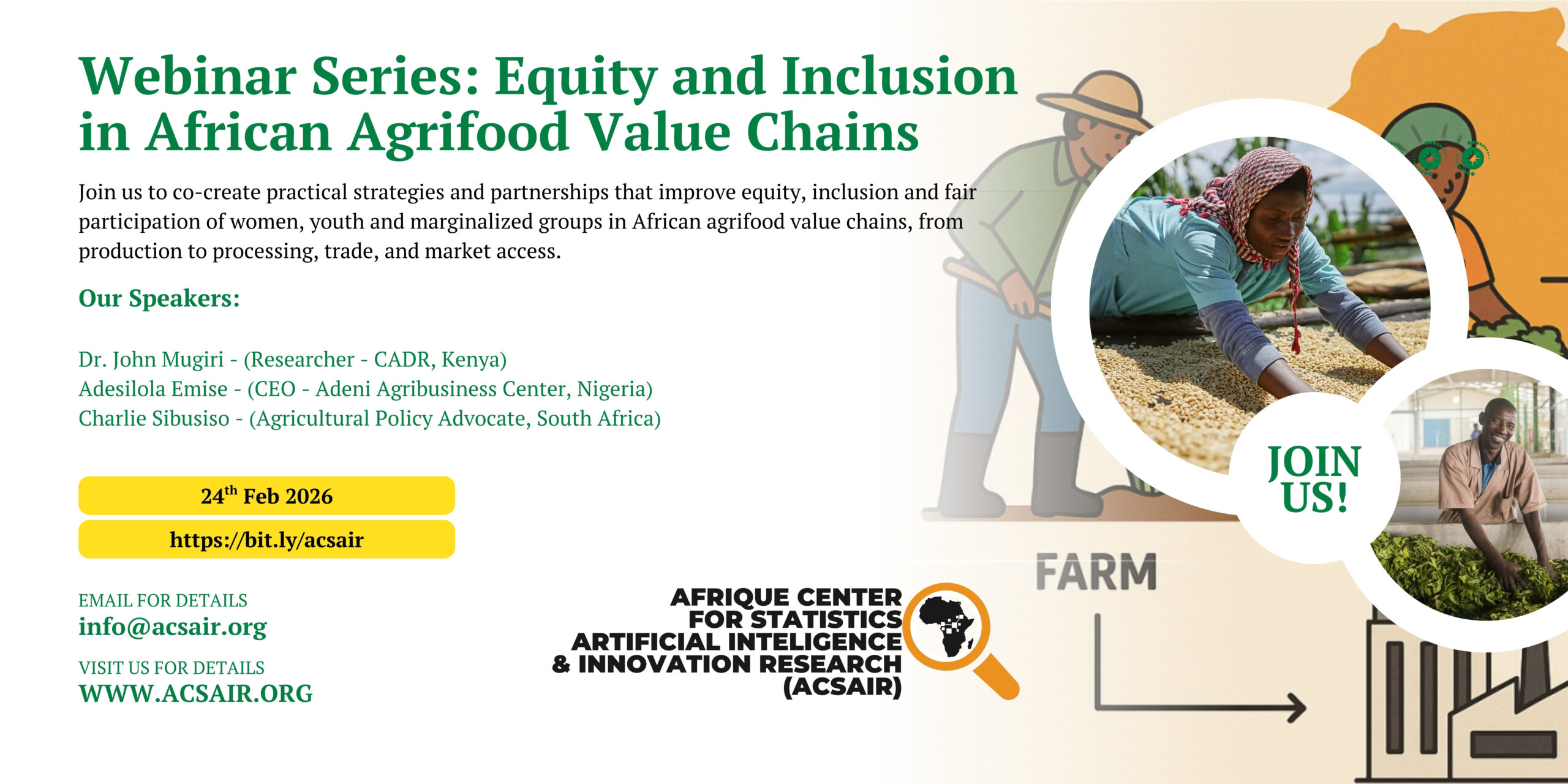
This workshop is designed to explore how policy commitments can be translated into practical, actionable steps for:
- Governments
- Value chain actors
- Farmer organizations
- Cooperatives
- SMEs
- Development partners
- Private-sector stakeholders
The goal is to move from frameworks and commitments to real-world action that strengthens inclusion across Africa’s agricultural value chains.